
Understanding the ABCDE Rule for Identifying Problematic Moles
- posted: Jul. 24, 2025
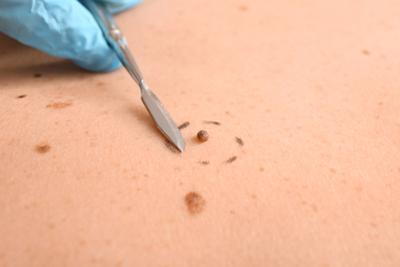
Most moles are harmless, but some can signal serious issues such as melanoma, the most dangerous form of skin cancer. Knowing how to spot unusual changes in a mole can make all the difference for your health. At Aberdeen Dermatology Associates in Aberdeen, and Northeastern South Dakota, Dr. Ty Hanson, D.O. and his team, help patients stay informed and proactive about their skin by teaching the ABCDE rule: a simple tool for recognizing the warning signs of potentially problematic moles.
What Is the ABCDE Rule?
The ABCDE rule is a guideline for assessing moles and other skin lesions at home. Each letter stands for a feature that may indicate a risk of skin cancer.
A – Asymmetry
A typical mole is symmetrical. If one half doesn’t match the other, that is a reason to have it examined.
B – Border
Healthy moles tend to have smooth, even edges. Moles with irregular, jagged, or blurred borders are worth getting checked.
C – Color
Uniform color, whether brown, tan, or black, is common in benign moles. If you notice multiple shades or patches of red, white, or blue, it’s a signal to call your dermatologist.
D – Diameter
Moles larger than 6 millimeters across (about the size of a pencil eraser) should be monitored more closely. While not all large moles are dangerous, size can be one clue among many.
E – Evolving
Perhaps the most important sign is change. If a mole starts to grow, itch, bleed, or change in any way, it’s time for a professional skin check.
When to See a Dermatologist
Not every unusual mole is cancerous, but it’s better to be safe. Dr. Hanson offers thorough skin evaluations and can help you determine which moles need monitoring or removal. Biopsy services and genetic testing are available right in the Aberdeen Dermatology Associates’ South Dakota office, making the process efficient and clear.
Why Early Detection Matters
Catching melanoma early dramatically improves outcomes. That’s why understanding what’s normal for your skin and what’s not is so important. Routine self-checks using the ABCDE rule, paired with regular dermatology visits, can help you stay a step ahead.
Book a Skin Check Today
When you visit our office in Aberdeen, South Dakota, you can bring up any skin concerns, big or small. Dr. Hanson and his team take a practical, thorough approach to prevention and treatment, helping patients feel confident in the care they receive.
If you’ve noticed a mole that’s changed or want a professional skin screening, call Aberdeen Dermatology Associates at (605) 226-0560 to schedule an appointment with Dr. Ty Hanson, D.O.
- posted: Jul. 24, 2025
Most moles are harmless, but some can signal serious issues such as melanoma, the most dangerous form of skin cancer. Knowing how to spot unusual changes in a mole can make all the difference for your health. At Aberdeen Dermatology Associates in Aberdeen, and Northeastern South Dakota, Dr. Ty Hanson, D.O. and his team, help patients stay informed and proactive about their skin by teaching the ABCDE rule: a simple tool for recognizing the warning signs of potentially problematic moles.
What Is the ABCDE Rule?
The ABCDE rule is a guideline for assessing moles and other skin lesions at home. Each letter stands for a feature that may indicate a risk of skin cancer.
A – Asymmetry
A typical mole is symmetrical. If one half doesn’t match the other, that is a reason to have it examined.
B – Border
Healthy moles tend to have smooth, even edges. Moles with irregular, jagged, or blurred borders are worth getting checked.
C – Color
Uniform color, whether brown, tan, or black, is common in benign moles. If you notice multiple shades or patches of red, white, or blue, it’s a signal to call your dermatologist.
D – Diameter
Moles larger than 6 millimeters across (about the size of a pencil eraser) should be monitored more closely. While not all large moles are dangerous, size can be one clue among many.
E – Evolving
Perhaps the most important sign is change. If a mole starts to grow, itch, bleed, or change in any way, it’s time for a professional skin check.
When to See a Dermatologist
Not every unusual mole is cancerous, but it’s better to be safe. Dr. Hanson offers thorough skin evaluations and can help you determine which moles need monitoring or removal. Biopsy services and genetic testing are available right in the Aberdeen Dermatology Associates’ South Dakota office, making the process efficient and clear.
Why Early Detection Matters
Catching melanoma early dramatically improves outcomes. That’s why understanding what’s normal for your skin and what’s not is so important. Routine self-checks using the ABCDE rule, paired with regular dermatology visits, can help you stay a step ahead.
Book a Skin Check Today
When you visit our office in Aberdeen, South Dakota, you can bring up any skin concerns, big or small. Dr. Hanson and his team take a practical, thorough approach to prevention and treatment, helping patients feel confident in the care they receive.
If you’ve noticed a mole that’s changed or want a professional skin screening, call Aberdeen Dermatology Associates at (605) 226-0560 to schedule an appointment with Dr. Ty Hanson, D.O.
Primary Location
3 Lafayette Street South,
Aberdeen, SD 57401-5524
Office Hours
Monday
8:00 am - 4:00 pm
Tuesday
8:00 am - 4:00 pm
Wednesday
8:00 am - 4:00 pm
Thursday
8:00 am - 4:00 pm
Friday
8:00 am - 12:00 pm
Saturday
Closed
Sunday
Closed